

Sonk-Kul


Longitude: 75°08′07″
maximum: ≈ 13-14 m


Son-Kul (also Song-Kol, Song-Köl, Son-Köl; Kyrgyz: Соң-Көл) is a large high-altitude freshwater lake in Naryn Region, Kyrgyzstan. It lies in an intermontane basin of the Inner Tien Shan at about 3,016 m above sea level and is one of the best-known symbols of Kyrgyz nomadic culture.[1][2]
The lake is known for broad high-mountain pastures, seasonal yurt camps, horse routes, open steppe landscapes and severe weather. Unlike the more resort-like Issyk-Kul, Son-Kul is perceived as a place of silence, space and seasonal nomadic life: in summer shepherds bring herds and yurts up to the jailoo, while in winter the area becomes difficult to access because of snow and closed passes.[1][3]
Corrections, route questions and additions can be left on the discussion page.
Name
The lake's name is written in different ways in travel literature: Son-Kul, Song-Kul, Song-Köl, Son-Köl and Song-Kol. In Kyrgyz it is written Соң-Көл. Translations and folk explanations vary; the name is often associated with the idea of the "last lake" and with local legends.[2]
The title used in this article follows the established WikiJournal page name, while alternative spellings are useful for search and travel planning.
Geography
Son-Kul is located in the northwestern part of Naryn Region, in a high-mountain basin between the Sonköl-Too and Moldo-Too ranges. Its elevation is about 3,016 m above sea level, making it one of the most famous high-altitude lakes of the Central Tien Shan.[1][4]
Figures for the lake vary slightly between sources: the surface area is usually given as about 270-278 km², the length as about 28-29 km and the width up to 18 km. The average depth is usually about 8.6-9.2 m, while the maximum depth is about 13-14 m.[2][4]
The lake is fed by small mountain rivers and streams flowing down from the surrounding ranges. The Son-Kul River flows out of the lake and is connected with the basin of the Naryn River. The shores are mostly open and treeless, surrounded by broad highland pastures known as jailoo.
Climate and seasonality
The climate of Son-Kul is harsh because of its altitude. Winter is long, cold and snowy; the lake freezes and roads over the mountain passes are usually closed. During this period there is almost no permanent tourist infrastructure, and trips require special preparation and reliable information about road conditions.
The main visiting season is the warm part of the year, roughly from late May or June to September. Even in summer the weather can change quickly: days may be sunny and warm, while evenings and nights are cold. Strong wind is common on the open plateau, so warm clothing is needed even in July and August.[1]
The water is cold. Swimming is possible only in warm weather and is usually a short refreshment rather than a full beach activity.
Nature

Son-Kul's landscape is defined by openness: the wide surface of the lake, soft pasture lines, mountain ridges on the horizon and almost no trees. This sense of space makes the lake popular with photographers, travellers and people interested in the seasonal life of Kyrgyz herders.
In summer, yurts, horse herds, sheep, cattle and yaks appear around the lake. Son-Kul is often described as one of the best places to experience nomadic culture in Kyrgyzstan: visitors can stay in a yurt camp, try local food, see the life of shepherd families and take horse rides.[3][1]
The lake and surrounding pastures are important for birds. Waterfowl, steppe birds and species associated with high-mountain landscapes can be seen in the area. Birdwatching should be done quietly, without approaching nesting sites or shoreline concentrations too closely.
Tourism
Son-Kul is best suited for nature, ethnographic and active tourism. There are no large hotels, promenades or permanent resort restaurants. The main accommodation format is seasonal yurt camps. Tent camping is also possible, but visitors should take into account wind, cold nights and the lack of urban infrastructure.
Popular trip formats include:
- overnight stay in a yurt camp;
- horse riding across the jailoo;
- walking routes around the lake and toward passes;
- sunrise and sunset photography;
- learning about seasonal herder life;
- combined routes through Kochkor, Naryn, Kyzart and other points of Naryn Region.
In high season, yurt camps should be booked in advance, especially in July and August. Tourism offices and local organisers in Kochkor and Naryn often arrange routes to Son-Kul.[1]
How to get there
Son-Kul can be reached by several roads over mountain passes. The most common routes are connected with Kochkor, Kyzart, Naryn and Ak-Tal. From Bishkek, travellers usually go through Balykchy and Kochkor; the further route depends on the chosen road, weather and pass conditions.
The distance from Bishkek to the lake area is several hundred kilometres, but the mountain part of the road is more important than the raw distance. The final sections use gravel roads and passes. In dry summer weather some roads may be passable for ordinary cars, but after rain and at the beginning or end of the season an off-road vehicle is preferable, and road conditions should be checked with local drivers or organisers.
Classic approaches to the lake cross passes that may be closed by snow. A trip to Son-Kul should therefore be planned as a seasonal journey: in summer or early autumn, with extra time and warm clothing.
Practical information
Before travelling to Son-Kul, consider the following:
- mobile coverage may be unstable or absent;
- there are almost no shops or banking services on the shore;
- nights are cold even in summer;
- sun, wind and fast weather changes require protection;
- rubbish should be taken away;
- drinking water and food should be planned in advance;
- when booking a yurt, check heating, meals, toilet, shower and blankets.
Son-Kul is not a place to treat like an urban beach. Its value lies in natural simplicity, remoteness and open high-mountain space.
Interesting facts
- Son-Kul lies above 3,000 m above sea level.
- It is one of the largest lakes in Kyrgyzstan and one of the country's main high-mountain natural symbols.
- Seasonal yurt camps operate around the lake in summer.
- In winter the lake freezes and the passes are usually closed.
- Son-Kul is often included in routes focused on Kyrgyz nomadic culture.
Photo gallery
- Photos of Son-Kul Lake
-
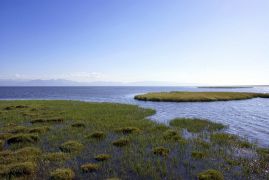 On the lake shore
 -
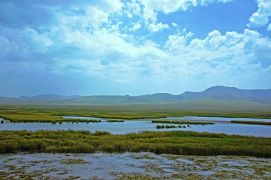 Lake and mountains
 -
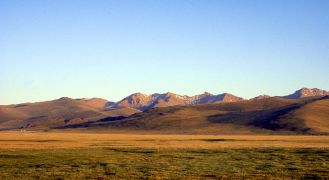 Mountains surrounding the lake
 -
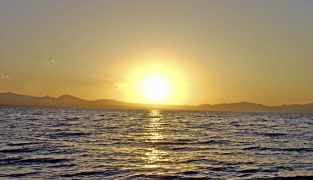 Sunset on the lake
 -
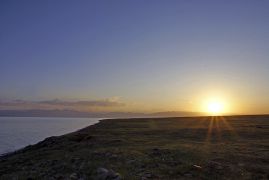 Evening on Son-Kul
 -
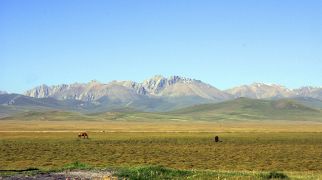 Beauty of the local mountains
 -
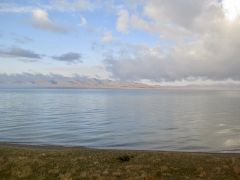 General view of the lake
 -
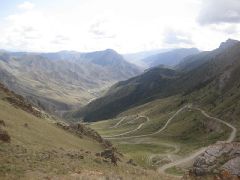 Scenic road to the lake


Photos courtesy of photographer Grigory Nikolaevich Kobko.
Author's note
Son-Kul should be seen not as an ordinary tourist attraction, but as a high-mountain space where the main impressions come from scale, silence, light, wind and the seasonal life of herders. It is better to come with at least one overnight stay: sunset, the night sky and morning on the lake are often more memorable than the road itself.
At the same time, the trip should be planned realistically. Altitude, cold nights, gravel roads and the lack of urban infrastructure require preparation. With the right season, reliable transport and a suitable yurt camp, Son-Kul can become one of the strongest points of a journey through Kyrgyzstan.
Other pages about the lakes of Kyrgyzstan
Sources
- ↑ 1.0 1.1 1.2 1.3 1.4 1.5 Song-Kul Lake — Nomadic Yurt Life at 3,016 m. Visit Kyrgyzstan.
- ↑ 2.0 2.1 2.2 Son-Kul Lake, Kyrgyzstan. Advantour.
- ↑ 3.0 3.1 Song-Kul Lake. Nomad's Land.
- ↑ 4.0 4.1 Song-Kol Lake. Kyrgyz Guide.